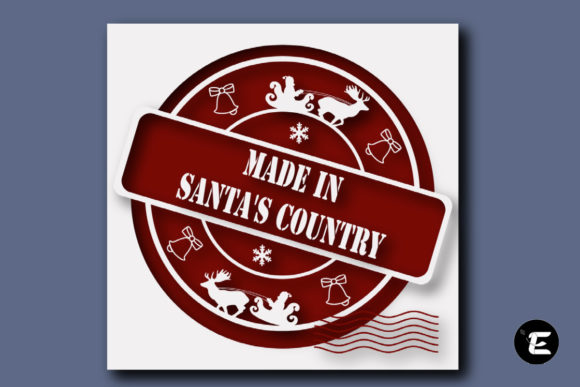
Made in Santa's Country: A Designer’s Review
As a professional embroidery designer and product reviewer, I approach every new asset with a critical eye toward production viability. When evaluating Made in Santa's Country, my primary focus is not just the festive aesthetic, but how this digital illustration translates from screen to stitch. While the product description highlights its utility for cards and digital papers via .SVG, .PDF, .PNG, and .EPS formats, my assessment centers on its potential as a foundation for textile art. For Etsy sellers, craft business owners, and apparel decorators, understanding the bridge between a flat vector graphic and a tactile embroidered piece is essential for creating high-value merchandise.
First Impressions and Seasonal Mood
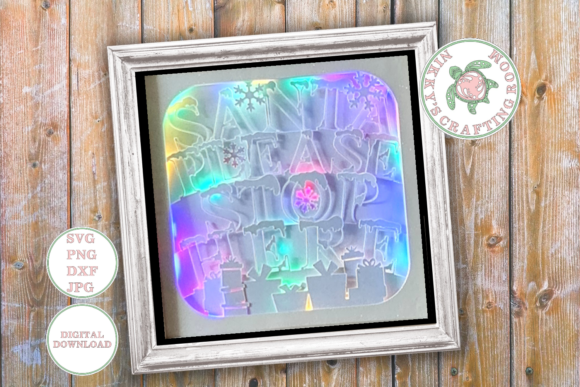
The initial visual impact of Made in Santa's Country evokes a nostalgic, storybook quality that is highly desirable for holiday embroidery projects. The layout suggests a whimsical narrative rather than a generic clip-art feel, which immediately elevates the perceived value of any finished product. For a handmade product seller, this distinction matters; customers are looking for unique holiday embroidery that feels curated and artistic. The composition appears balanced enough to serve as a central motif on custom apparel or a standalone framed piece. However, because this is marketed alongside Shadow Boxes and 3D SVG categories, designers must be mindful of depth. If adapting this for machine embroidery design, one must decide whether to flatten the image for traditional stitching or utilize the layered nature of the 3D SVG concept to create dimensional applique work.
Real-World Application: The Custom Sweatshirt Test
To truly judge the commercial viability of this design, I mentally placed it into a specific production scenario: creating a premium holiday sweatshirt for a boutique collection. In this real-life case, the goal was to produce a garment that feels soft to the touch yet visually striking. Made in Santa's Country offers excellent potential here, provided the digitizing strategy aligns with the fabric texture. A heavy cotton fleece sweatshirt can handle moderate stitch density, but if the original illustration contains intricate line work typical of detailed Christmas illustrations, a direct conversion to satin stitch could result in a stiff, bulletproof patch of thread.
For this sweatshirt embroidery project, I would recommend interpreting the finer details of the illustration as running stitch outlines or redwork rather than dense fill stitch. This maintains the drape of the garment, ensuring the personalized gift remains comfortable to wear. If utilizing the design for an embroidered patch instead, the density can be higher, allowing for more vibrant thread colors and sharper definition. This versatility makes the design asset valuable for multiple product lines, from wearable custom apparel to decorative nursery decor.
Navigating Fabric Constraints and Technical Limits
While the artistic merit of Made in Santa's Country is clear, practical application requires caution regarding substrate selection. Not all fabrics are created equal when translating complex digital illustrations into thread.
- Stretchy and Thin Fabrics: If applying this design to baby clothes or lightweight knits, the stitch density must be reduced significantly. High-density areas from a detailed illustration can cause puckering or distortion. Always pair with a cut-away stabilizer to maintain structural integrity.
- Textured Surfaces: On terry cloth towels or nubby linen, fine details may get lost. In these cases, use a water-soluble topping to keep stitches above the fabric pile. You may need to simplify the design elements to ensure readability.
- Dark Fabrics: The contrast is king. If the original illustration relies on subtle shading, it may not translate well to dark navy or forest green sweatshirts without significant color adjustment. Test thread colors against the actual fabric swatch before committing to a full production run.
- Small Hoop Sizes: Intricate illustrations often suffer when scaled down. If you intend to use this for cap embroidery or small tags, verify that the smallest text or detail elements remain distinct at reduced sizes. Running stitch lines thinner than 1mm may disappear or break during stitching.
Enhancing Product Value and Brand Consistency
For creative entrepreneurs and small shop product sellers, consistency builds trust. Using Made in Santa's Country across various mediums—perhaps as a tote bag design, a tea towel accent, and a matching greeting card—creates a cohesive brand narrative. The inclusion of vector formats like .SVG and .EPS allows for crisp printable mockups, which are vital for pre-selling items or showcasing digital embroidery file options to clients who want to see the potential before purchasing.
However, value is also determined by execution. A poorly stabilized embroidery project using this design will look amateurish, regardless of the source art's beauty. Professionalism comes from testing. Before listing a finished product on Etsy or at a craft fair, run a sample. Check if the design registration holds up after washing. Does the satin stitch pull away from the fill stitch? These technical validations protect your reputation and ensure customer satisfaction with their personalized gift.
Critical Notes for Embroidery Professionals
It is important to note that the provided file formats (.SVG, .PDF, .PNG, .EPS) are vector and raster graphics, not native machine embroidery files (like .PES, .DST, or .JEF). This means Made in Santa's Country serves as exceptional source art for digitizers but requires conversion before hitting the hoop. Do not attempt to load these directly into an embroidery machine unless your software supports auto-digitizing from vectors, and even then, manual cleanup is usually necessary for professional results.
When preparing this design for commercial embroidery or personal use, adhere to these best practices:
- Verify Licensing: Before selling finished goods or digital derivatives, confirm the specific license terms included with the compressed file. Ensure you have the right to use the design for commercial products versus personal crafting only.
- Test on Scrap Fabric: Never stitch a final product without a test run. Use the exact fabric and stabilizer combination intended for the final piece to gauge tension and density.
- Assess Detail Clarity: Zoom in on the digital file. If lines are too close together, they may merge when stitched. Adjust spacing or remove non-essential elements to prevent thread buildup.
- Mockup Validation: Create black and white mockups to evaluate contrast independent of color. If the design reads well in grayscale, it will likely stitch clearly in thread.
- Stabilizer Selection: Match the stabilizer weight to the design density and fabric type. A complex illustration on light fabric demands different support than a simple outline on denim.
Final Verdict for Makers and Sellers
Made in Santa's Country presents a charming, versatile foundation for holiday-themed creation. Its strength lies in its illustrative quality, which lends itself beautifully to both digital paper crafts and adapted textile applications. For the embroidery designer willing to put in the digitizing work, it offers a pathway to unique, non-generic holiday merchandise. Whether you are crafting a shadow box display, a custom embroidered patch, or a boutique sweatshirt line, success depends on respecting the technical translation from vector to stitch. By approaching this design with practical testing and thoughtful adaptation, makers can transform a digital download into a tangible, high-quality asset that resonates with customers and enhances their creative portfolio.